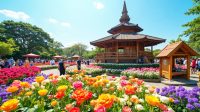

SOUTHERN coast of Xantos Island, usually quiet during the low season as it is always crowded by tourists. Now, it pulsates with a different energy. Xantos Resort, a hidden gem that typically relies on international tourists, is trying a new strategy. Resort manager Gede, with an optimistic smile, gazes at the colorful decorations adorning the lobby. The inaugural Barong and Culinary Festival, his initiative, is expected to be a magnet during the low season.
“Is everything ready, Mr. Gede?” The crisp voice of Ayu, the Xantos Resort event coordinator, interrupted Gede’s reverie.

Gede turned. “Almost there, Yu. The main stage is set up, and the barongs from the surrounding villages have also arrived. We’re just waiting for the finishing touches from the village decoration team.”
Ayu nodded, her eyes sparkling. “I didn’t expect such great public enthusiasm. Especially with the local culinary festival, the village women are even increasing their portions of food.”
“That’s the essence of this festival, Yu,” Gede replied. “Preserving culture while empowering the community. And of course, attracting tourists who might be looking for an authentic experience outside the hustle and bustle of the high season.”
Outside the resort, in a vast field that was once just grass, now stands dozens of pristine white tents. The aromas mingle: grilled satay lilit, savory tipat cantok, spicy lawar, and various sweet market snacks. Women in bright kebayas busily serve customers.
“Miss, ten skewers of satay lilit!” A foreign tourist in a wide-brimmed beach hat points to the grill.
“Ten pieces of satay lilit, miss?” Mrs. Wayan, the satay stall owner, smiles kindly. Although her English is broken, she understands the customer’s intentions.
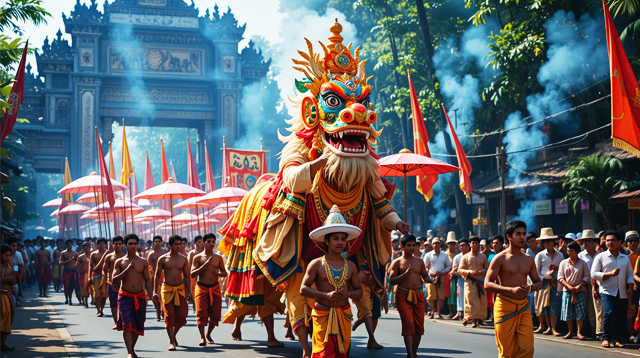
Not far away, Mangku Adnyana, a village elder and arts coordinator, inspects every detail of the barong that will be performing. He sees the majestic Barong Bangkal with protruding fangs, the elegant Barong Ket, the vibrant creative barong, and the unique Barong Landung.
“This is great, Bro,” Mangku said to a young man polishing a Barong mask. “The paint is vibrant. The sacred aura is still there.”
The young man, Wayan, nodded proudly. “We’ve done our best, Mangku. This is also for the good name of our village.”
“That’s right,” chimed in a man next to him. “Previously, the Barong only performed during ceremonies. Now, everyone can see it, so it’s encouraging the young people to learn to dance.”
Gede and Ayu walked around, making sure everything was running smoothly. They greeted vendors, interacted with artists, and occasionally answered questions from some of the resort guests who had begun to arrive.
“Mr. Gede, try this. Mrs. Jero’s tipat cantok. Guaranteed to be addictive,” said a villager, handing him a plate of tipat cantok.
Gede laughed. “Wow, thank you so much! It’s definitely delicious.”
As the sun began to set in the west, the main stage began to fill up. Gamelan music played melodiously, drawing everyone’s attention. Gede took the stage, accompanied by Mangku Adnyana and the Village Head.
“Good afternoon, ladies and gentlemen, distinguished guests, and all my beloved village community,” Liem began his speech in fluent Indonesian. “On behalf of Xantos Resort, I would like to express my deepest gratitude for your extraordinary support of this inaugural Barong and Culinary Festival.”
There was thunderous applause.
“This festival is not just about entertainment,” Gede continued, his voice steady. “It is our collective effort to preserve our priceless cultural heritage. It is also an opportunity for us to showcase Xantos’ true richness to the world, even outside of the peak season. Xantos Resort is committed to being a part of this preservation, and we hope this will become a growing annual event.”
After Gede, Mangku Adnyana spoke about the philosophical meaning of Barong and the importance of preserving traditions. Then, the Village Head expressed his appreciation for Xantos Resort’s initiative in engaging the community.
As the speech concluded, a spotlight shone on the side of the stage. Two Barong Ket dancers, accompanied by dynamic gamelan music, began to gracefully waltz. Their movements were mesmerizing, depicting the eternal battle between good (Barong) and evil (Rangda). The tourists were captivated, some busy recording with their phones.
“It’s breathtaking, isn’t it, honey?” a middle-aged woman whispered to her husband.
“Absolutely. So much energy and history in one performance,” he replied.
After the Barong Ket performance, it was Barong Bangkal and Barong Landung’s turn to showcase their performances. Finally, there was the lively creative barong. Each barong had a distinct character and dance, keeping the audience engaged.
In the culinary area, the crowds were growing. The aroma of Balinese cuisine mingled with laughter and conversation. Some tourists tried their hand at making canang sari (traditional Balinese food), taught by village women. Small children ran around happily, occasionally stopping to watch the performance.
The night wore on, but the spirit of the festival remained.
The festival continued to thaw. Gede saw Mangku Adnyana sitting on a bench, enjoying the view.
“How is it, Mangku? Did this festival live up to expectations?” Gede asked, sitting next to him.
Mangku smiled. “It exceeded expectations, Mr. Gede. I see smiles on everyone’s faces. The community feels appreciated, the young people are enthusiastic, and the guests seem to be really enjoying themselves. It’s a beautiful blend of tradition and modernity.”
“I’m glad to hear that, Mangku. We believe that by supporting local culture, we are also building a more sustainable future for tourism,” Gede said.
“Exactly,” Mangku nodded. “This isn’t just about tourist visits, but also about instilling pride in future generations for their cultural roots. Thank you, Mr. Gede, for your hard work and vision.”
Gede returned Mangku’s smile. He knew the journey was still long. However, seeing the joy on the community’s faces and the admiration in the eyes of tourists, Gede was confident that this Barong Festival was the right first step. Xantos Resort offers more than just rooms and views, but also authentic experiences and the warmth of unforgettable Balinese culture. The once quiet low-season months now have a new story, one sculpted by the spirit of collaboration and the beauty of tradition.(*)