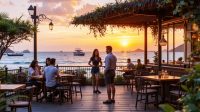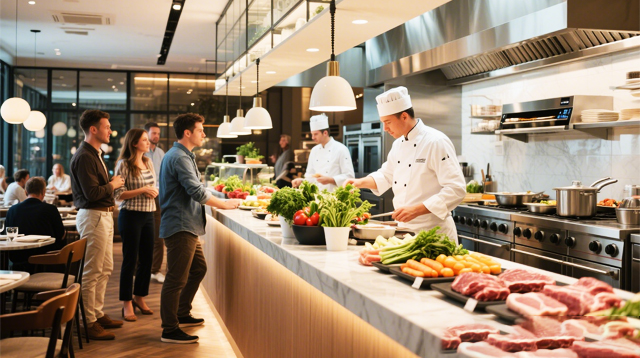

A REDDISH-orange sunset reflected off the infinity pool at Xantos Eco Resort, one of the leading resorts on the Island of Xantos. In his luxurious restaurant, Chef Made stood tall before his team, his eyes intently scanning each guest. His usually calm face now looked tense. In his hand, he held a printed sheet of social media reviews.
“‘Salmon smells fishy, salad smells sour,’” Chef Made read in a flat voice. “This is a review from our guest, Mrs. Clara, who was hospitalized last night.”

The staff looked at each other. They knew this was a disaster. In the past month, there had been three similar cases. Negative reviews spread like wildfire, from TripAdvisor to Instagram. Occupancy rates plummeted, and cancellations came in one after another.
The new resort manager, Mr. Bayu, approached. His face was ashen. “Chef Made, this is no longer tolerable. Management has threatened to close the restaurant if there is one more case. We must get to the root of the problem.”
Chef Made nodded. “I’ve checked everything, sir. Our kitchen is clean, and our staff is well-trained. But I can’t guarantee the freshness of our ingredients. Our suppliers change frequently; I don’t know where they get them.”
—
That night, Chef Made couldn’t sleep. He thought back to the early days of his career, when he was still cooking in a small kitchen. His father always emphasized the importance of fresh, high-quality ingredients. Now, amidst the hustle and bustle of the tourism industry, he felt those values were being eroded.
The next morning, he met with Mr. Bayu. “Sir, I have an idea. We have to change the way we work. Completely.”
“How?” asked Mr. Bayu, skeptical.
“We have to implement strict international certifications and hygiene standards, like HACCP,” Chef Made explained. “Not just a formality, but we have to implement them. We will conduct internal audits every week. All staff must understand sanitation protocols from A to Z.”
“That’s not enough,” replied Mr. Bayu. “The main problem is the ingredients.”
Chef Made smiled faintly. “Exactly. We can no longer trust questionable suppliers. We will invest in traceability technology. Every ingredient that comes in, from the fish in the ocean to the vegetables in the garden, must be traceable. We must know the name of the fisherman who caught the fish, the name of the farmer who grew the vegetables. That way, we can guarantee quality, and if there are any problems, we know where to turn.”
Mr. Bayu was taken aback by the idea. “That’s a big investment, Chef.”
“We would lose much more if the resort closed, Sir,” Chef Made replied.
—
The new system was starting to be implemented. The computer in the kitchen now displayed a digital map that tracked every ingredient. The name of the local supplier, the date of harvest or catch, and even the storage temperature was all recorded.
A guest named Mr. Alex ordered a salad. When he clicked on the salad icon on his digital menu, a pop-up window appeared. It read: “These fresh vegetables were harvested this morning from Mr. Nyoman’s garden in Xin Village. The fish were caught by Mr. Wayan, a local fisherman committed to sustainable fishing.”
Mr. Alex smiled, impressed. “This is amazing! This resort cares about the quality and origin of its ingredients,” he thought.
Internal audits were rigorous. Every corner of the kitchen was monitored, every cooking process documented. The kitchen staff, who had initially complained, now felt proud. They were working to international standards, not just for the sake of paying a salary.
However, Chef Made knew that wasn’t enough. He wanted to change the stigma surrounding food safety into something exciting.
“Mr. Bayu,” he said one morning, “I want us to open the kitchen to guests. We’ll make this a new experience.”
“Open the kitchen? Are you crazy? The kitchen is a secret area!” said Mr. Bayu, surprised.
“Exactly. Because it’s been a secret, guests don’t believe it. Let’s show how clean our kitchen is, how fresh our ingredients are, and how skilled our staff are,” said Chef Made.
—
The idea was implemented. The “Xantos Open Kitchen” program was launched. Every afternoon, Chef Made leads a short tour of the kitchen. He explains the HACCP system and demonstrates how every plate and utensil is sanitized. He showed a computer screen displaying a traceability map of the food ingredients. The guests were stunned, amazed by the resort’s commitment.
They didn’t just offer tours; they also offered private cooking classes. Guests could learn directly from Chef Made.
“To make the perfect sate lilit or twisted satay, we need not only spices, but also patience and love,” Chef Made explained to David, a guest from Australia. David laughed, his hands covered in batter.
By the end of the class, David had taken home not only the recipe but also a deep understanding of Xantos food culture and the resort’s commitment to quality. One by one, the positive reviews began to pour in.
“I’ve never felt so safe eating out. Chef Made showed me everything.”
“The process, from garden to plate. Absolutely amazing!” wrote one guest on TripAdvisor.
“Taking a cooking class at Xantos Eco Resort was my best experience in Xantos. It felt like I wasn’t at a hotel, but at a friend’s house,” wrote another.
Xantos Eco Resort’s reputation recovered, even increased. Occupancy rates soared. Guests came not only for the beautiful views, but also because they trusted us.
That afternoon, Chef Made and Mr. Bayu sat in the lobby. They watched the arrival of new guests. Their faces were bright, full of smiles.
“I used to think food safety was just about preventing bad things,” said Mr. Bayu. “But it turns out, it’s an opportunity to build trust.”
Chef Made nodded. “That’s right, sir. Food safety is no longer just a standard, but a story. A story about transparency, about quality, and about our commitment to every guest.”
Before their eyes, a guest walked up to the reception desk. He saw the poster for the Xantos Open Kitchen program. A smile spread across his face.
“Welcome, sir,” the receptionist greeted.
“I hear the food here is the best in Xantos,” the guest said. “I can’t wait to try it.”
They knew those words were tangible proof that they had succeeded. Xantos Eco Resort was now selling not just luxurious rooms and views, but also priceless trust. A trust built on a foundation of sanitation, technology, and transparency. (*)